

A natural house and a conventional building
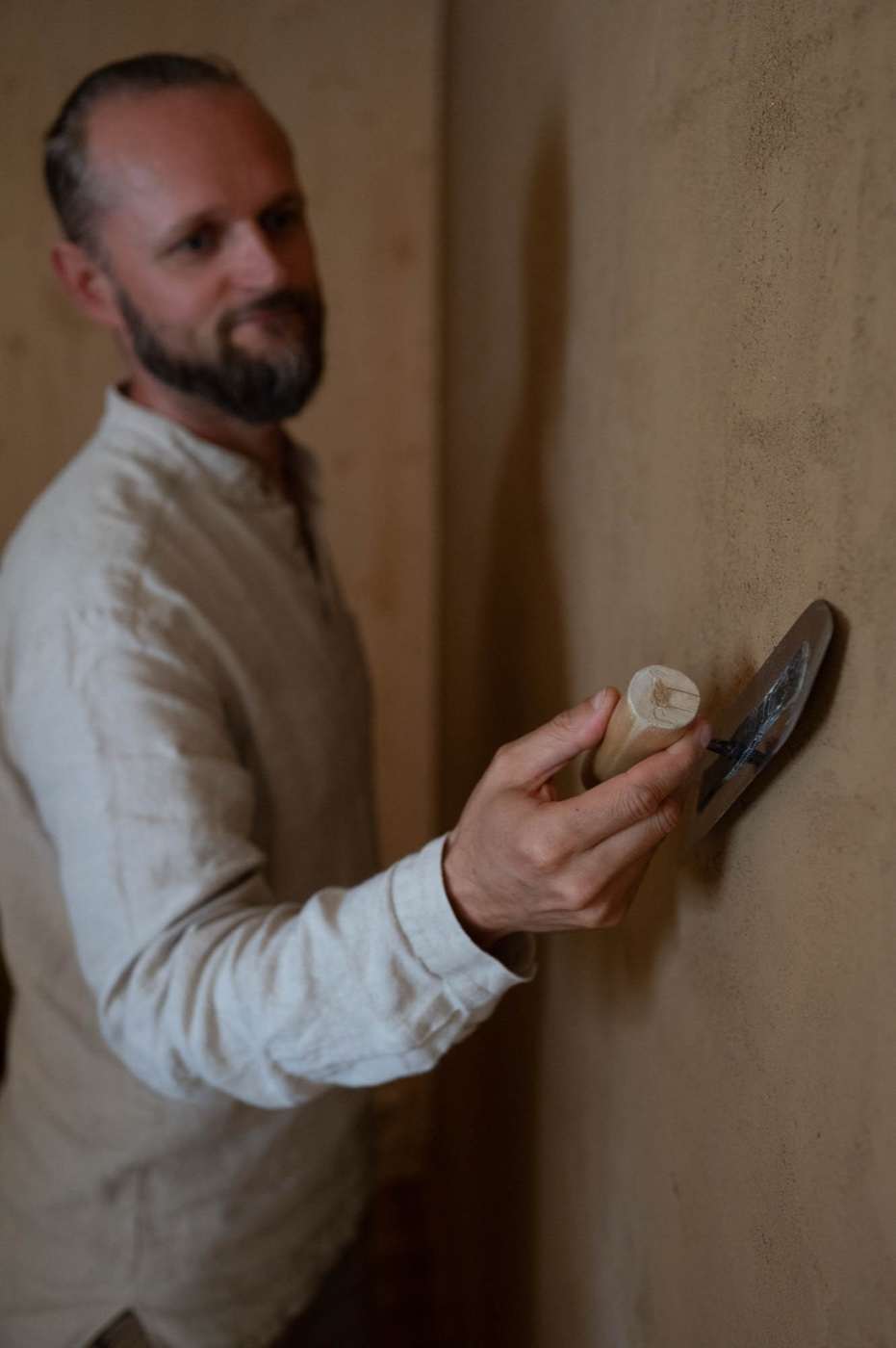
This is a summary of an interview with Marek Rabik (in Slovak) from September 2025. These are his views and his experience from practice.
What healthy living means
Marek sums up the term like this: an interior and a home that benefit the people living there and are not toxic. This covers the composition of materials, the way of heating and ventilating, and the light in the rooms.
For him it is part of wider natural building and a permaculture way of life. He came across the term around 2013 at a lecture by the researcher Veronika Kotradyová.
The main technical difference
In a conventional building, chemical processes take place. Cement plaster sets chemically and you cannot get the original raw materials back from it.
In a natural building, the joints are mostly mechanical. Clay plaster is an example: it sets by water evaporating and, when water is added, it becomes the same material again.
We can take the house apart into its original materials without losing their properties and use them again in the building process.
This principle is known as cradle to cradle.
Why a natural house costs more
Marek answers this directly: some materials have to be replaced with natural ones, these cost more and the work demands more craft. As an illustration he says that a house costing €200,000 might cost €250,000 in natural materials. It is a model example, not a price offer.
When you are deciding
According to Marek, many people decide based on aesthetics and trends, because they cannot “taste” a house before buying it. Those who look for information begin to distinguish between the structure and the final interior.
You will find specific data on our homes in the construction build-up and in the home catalogue.
What the research says
Nervous system. A 2021 systematic review by Lipovac and Burnard assessed nine trials with 386 people. With longer stays in a room with wood, most of them found at least some favourable indicators, such as lower physiological arousal. The authors write that wood may improve certain indicators of stress and call for further research. These were short laboratory trials, not living in a home.
Air and humidity. The German federal institute BAM tested more than 30 natural materials, including clay plasters and wood fibre, in 19 wall build-ups. 17 of them would meet the German criteria for emissions into indoor air. In laboratory tests clay plaster absorbs and releases water vapour well. In a modelled room it dampens short-term swings in humidity, similarly to gypsum plaster, and ventilation sets the average humidity.
Acoustics. Clay plasters absorb sound only weakly. We have not yet measured the acoustics of specific Permamodul homes.
Electrosmog. Measurements exist for unfired clay walls and clay composites. We have no measurement for the plaster in our build-up, and the effect depends on thickness and moisture.
This is general knowledge about materials, not a medical claim about a specific home.